




Design the workflow
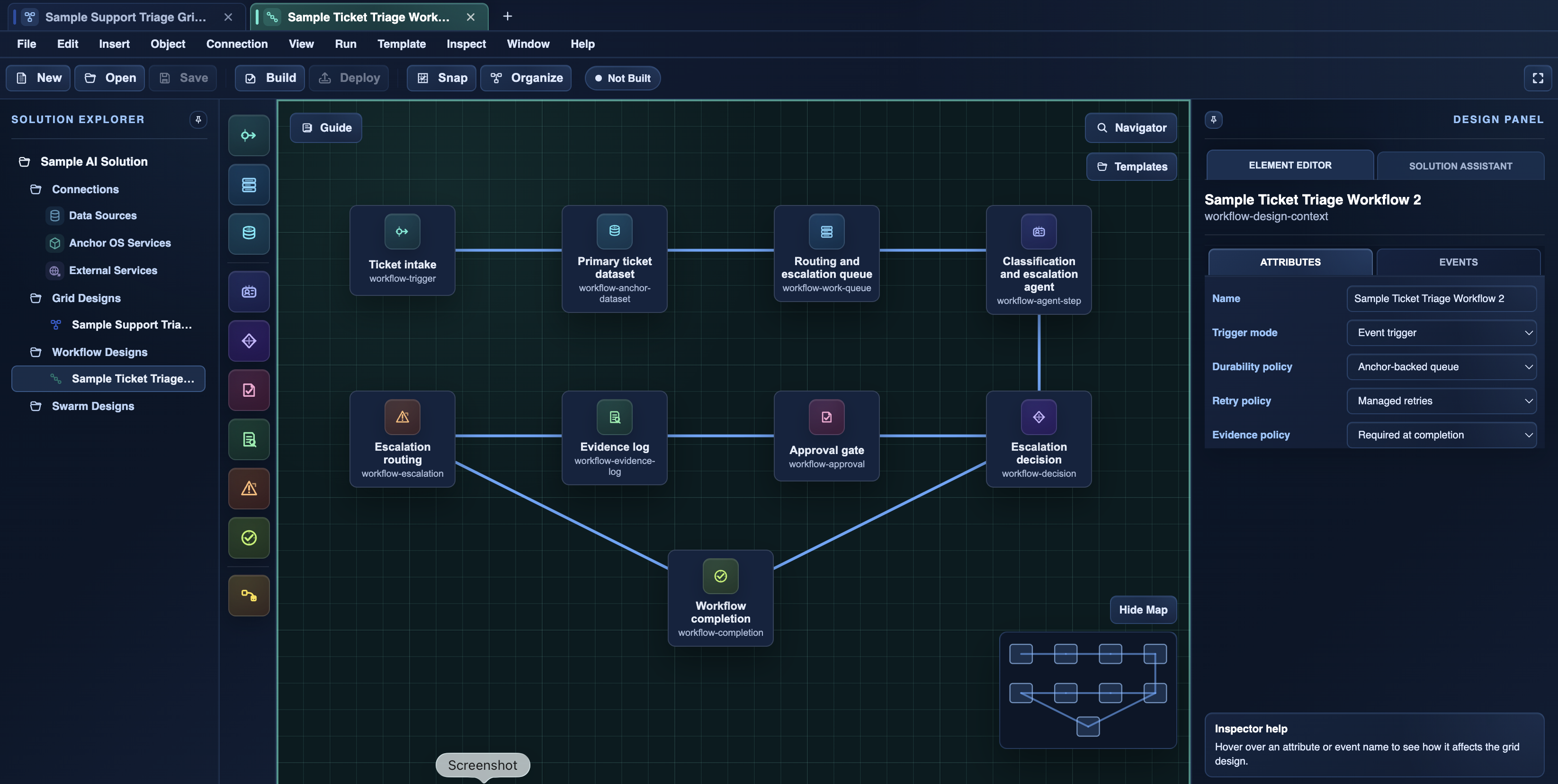
Map the customer path, service steps, queues, approvals, and completion points before the first run touches real work.
EngineGrids gives developers one place to build, launch, and inspect AI systems through a SQL-native control plane. Replace fragile provider glue with platform state that keeps production work readable.
Day 1 developers
EngineGrids lets developers model workflows, runtime grids, agents, evidence logs, approvals, and handoffs in the same workspace where the system will be built, inspected, and prepared for production.
Map the customer path, service steps, queues, approvals, and completion points before the first run touches real work.
Keep names, trigger modes, durability rules, retry policies, and evidence requirements visible while the design is still changing.
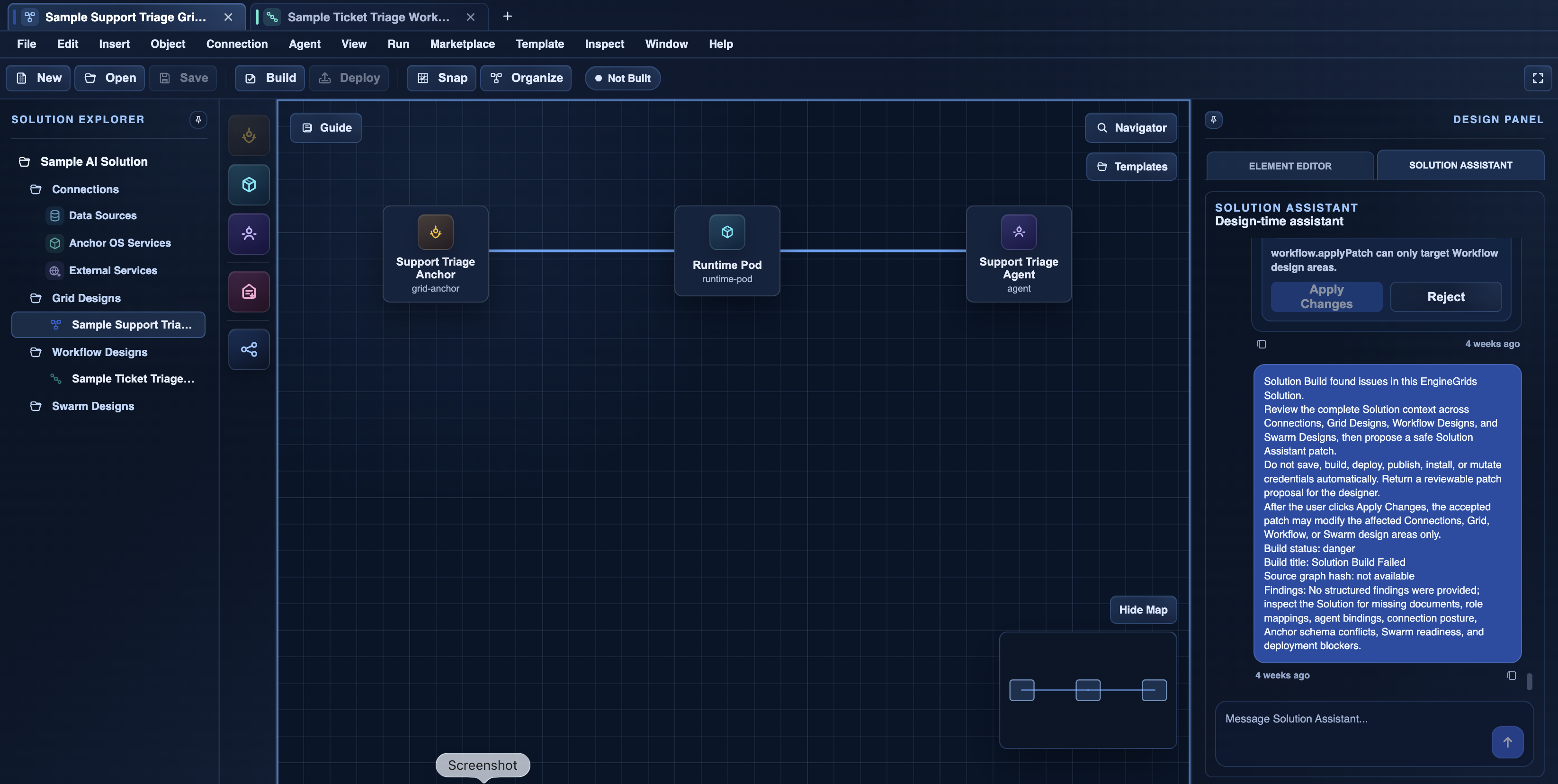
Use build checks and assistant feedback to catch missing mappings and deployment blockers while the system is still safe to change.
EngineGrids gives developers more speed at the front and more operational clarity at the back. We replace brittle integration glue with a governed operating surface built for the long horizon.
Replace fragmented provider libraries with governed app surfaces and durable platform state.
Inspect, replay, and explain production behavior with zero runtime fog.
Speed at the front should not become unmanaged runtime behavior after launch.
Subscribing to a service through grid.services auto-installs the app surfaces and bindings the grid needs.
insert into grid.services (name, plan)
values ('stripe', 'production');Instead of calling brittle SDKs, insert intent into governed tables. Sidecar handles the provider work.
insert into stripe.invoices (customer_id, amount, currency)
values ('cust_123', 4200, 'usd');Every action produces a durable audit row. Inspect intent, execution, and provider response in one place.
select * from platform.audits
where object_id = 'inv_123'
order by created_at desc;Build on tables where intent and outcome are always auditable.
Keep agent logic clean while the platform carries provider complexity.
Install capability through grid.services instead of rebuilding connector paths.
Inspect, replay, and explain production behavior with clear runtime history.
EngineGrids helps developers move quickly while keeping runtime behavior visible to the operators and business owners who inherit the system.
A service subscription auto-installs the app surfaces and bindings the grid needs.
Instead of calling brittle SDKs, write intent into tables and let sidecar handle provider work.
Every action produces a durable audit row that survives production scale.
The system should explain what it did, why it did it, and what changed after it ran.
Use the platform model, trust threshold, and documentation to build serious AI systems without losing runtime clarity.
Go deeper into the control plane that turns installs, runtime, real-system work, and audits into one operating model.
See the platformUnderstand why this runtime matters once AI touches customers, money, records, and real workflows.
See trustUse the documentation center when you need the product surface and implementation detail.
Read docsBuild the first system with clear runtime controls, readable action history, and enough structure for operators to trust it when real work begins.